
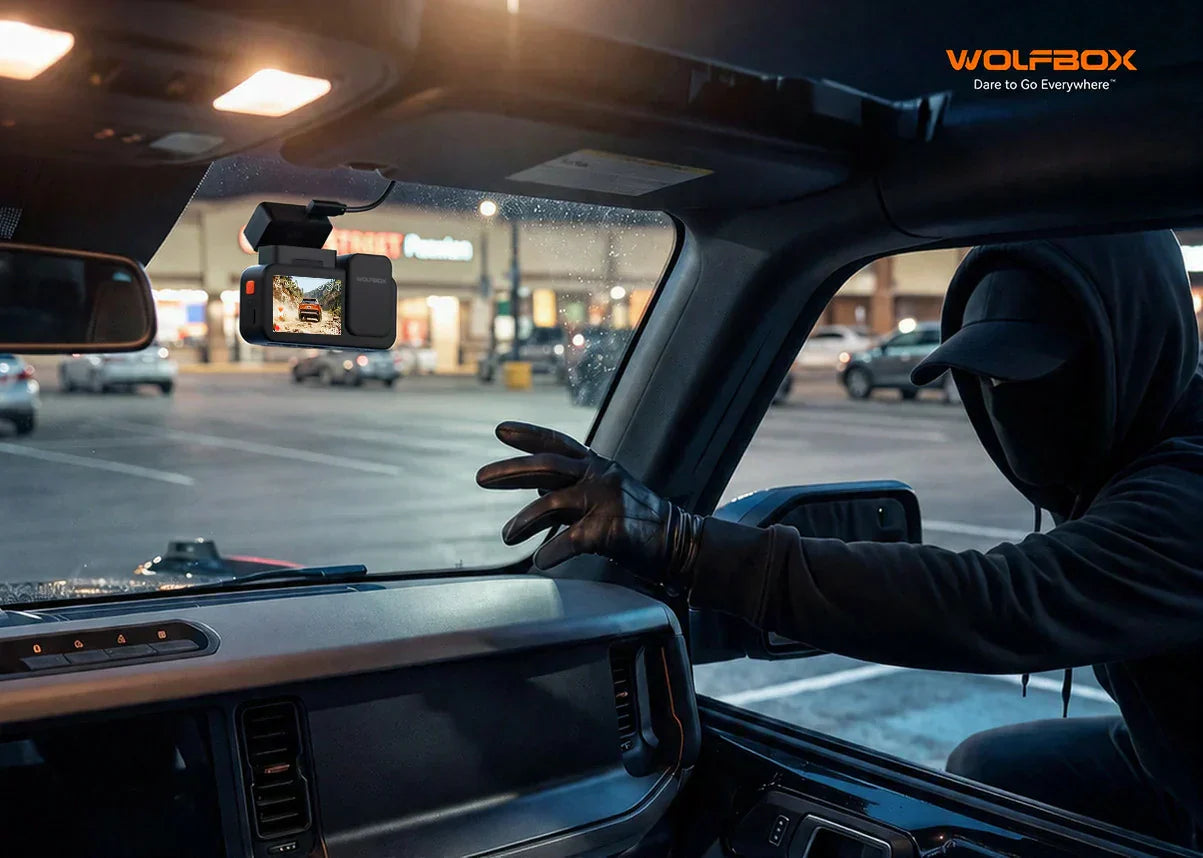
You may have installed a dash cam to record suspicious activities. The irony? Someone steals the camera itself. Do people steal dash cams? The answer is yes, and surprisingly, it happens more often.
The good news is that dash cam theft risk isn't random. It mostly depends on how visible your camera is, how it's mounted, and whether a thief can grab it in under 10 seconds.
Get those factors right, and most opportunistic thieves will walk straight past your vehicle. This guide explains exactly how to do that, including why your chosen dash cam type matters more.
Do People Steal Dash Cams? Understanding Real Risk
We've already mentioned irony. It's worth understanding why dash cams attract thieves before jumping to prevention. The risk is more predictable than it looks.
Four Reasons Dash Cams Get Targeted
Not all car accessories get stolen with the same regularity. Dash cams end up on the target list for four specific reasons that work together to make them an easy mark.
- Visibility: A dash cam mounted on the windshield is impossible to miss from the outside. It signals to anyone walking past that there's a piece of electronics inside worth taking.
- Easy Removal: Traditional windshield-mounted dash cams attach via suction cup or adhesive bracket. A practiced thief can remove in five to ten seconds without tools, struggles, or delays.
- Resale Value: Quality dash cams sell for $100 to $300 or more on the secondhand market. That's enough to make a smash-and-grab worth the risk for someone inclined to take it.
- Targeted theft aimed at destroying footage: A dash cam may have recorded an incident (a hit-and-run, a near-miss, or an altercation). And the person responsible may come back specifically to eliminate that evidence. That's why cloud backup and remote storage seem more than a convenience.
Where Theft Happens Most Often?
- Urban Street Parking: High foot traffic and minimal surveillance create ideal conditions for opportunistic theft.
- Unfamiliar Overnight Parking: Away from home, away from neighbors who might notice something wrong.
- Public Lots and Garages: Vulnerability persists for cameras with limited coverage or poor lighting.
- High-Crime Neighborhoods: Vehicle break-ins already happen frequently, regardless of what's visible inside.
How to Prevent Dash Cam Theft – 4 Proven Strategies
Most dash cam theft is opportunistic. That's actually good news! It means simple, practical steps make a real difference. Dive into the four strategies that work together to reduce your exposure.
1. Choose a Less Obvious Form Factor
The most effective step in preventing dash cam theft happens before installation. Discreet designs—such as mini dash cams or rearview mirror-style units like mirror dash cam—are less noticeable from outside the vehicle and reduce visual attention on the windshield.
Compared to traditional windshield-mounted dash cams, these low-profile options are less likely to signal that valuable electronics are inside the car, helping reduce opportunistic theft risk.
2. Hide the Cables – Visible Wires are a Giveaway
Even if the camera itself isn't obvious, dangling power cables tell the whole story. A wire running from the dashboard to the windshield is one of the clearest signals that there's an electronic device.
Routing cables through the headliner and down the A-pillar solves this issue. It takes about 20 to 30 extra minutes for installation and requires a plastic trim tool to turn the interior factory-clean.
3. Hardwire for Parking Mode – Let the Camera Work in Your Absence
A hardwired dash cam with a reliable parking mode and G-sensor records while you're driving. Also, it activates the moment it detects vibration or impact while the vehicle is parked.
If someone tries to break a window or force a door, the camera starts recording right away. It serves two purposes. First, it creates footage that may help police identify the thief.
Secondly, it acts as a psychological deterrent. A thief who spots an active recording light may reconsider. In such cases, the parking mode must be powered by a hardwire kit or an OBD connector.
4. Remove the Camera in High-Risk Parking Situations
Removal before parking in unfamiliar or high-risk areas is the simplest theft prevention with windshield-mounted dash cams on suction mounts. This is especially effective for windshield-mounted units with suction or quick-release mounts.
By taking the camera down and storing it inside the glove box or bag, the vehicle appears stock and less targeted. It also eliminates visible electronics from the windshield, reducing opportunistic break-in risk in overnight or street parking situations.
Read more: How to Prevent Car Theft
Why are Rearview Mirror Dash Cams Naturally Harder to Steal?
Beyond general theft prevention, a rearview mirror dash cam's design makes it a poor target.
1. Visibility: The Biggest Factor in Whether a Thief Notices
A traditional dash cam mounted in the center of the windshield is visible from 20 feet away. Anyone walking through a parking lot can identify it at a glance. The moment they do, a mental calculation begins: is there anything else worth taking?
A digital rear-view mirror like the Wolfbox mirror dash cam, however, is designed to blend into the existing rear-view mirror setup. It can be installed either by securing it over the factory mirror using straps or by replacing the OEM mirror with a direct-fit bracket, depending on the vehicle configuration.
Someone will have to peer through the glass and specifically look for the lens housing. In reality, no opportunistic thief takes the time to do so, unregistering it as a target.
2. Removal Difficulty: Why Smash-and-Grab Doesn't Work?
Traditional dash cams on suction or adhesive mounts come off instantly. A thief who breaks the window has the device off the mount and in their pocket before anyone can react. The entire act takes under 15 seconds.
In contrast, a Wolfbox mirror dash cam installed using an OEM bracket typically requires unscrewing the mount and disconnecting hardwired cables for full removal. That's not a 15-sec job. It takes tools, time, and attention; none of which a smash-and-grab thief has.
Preventing Dash Cam Theft: Traditional Dash Cam vs Wolfbox Mirror
|
Factor |
Traditional Windshield Cam |
Wolfbox Mirror Dash Cam |
|
Visibility Level |
High (obvious on windshield) |
Low (looks like stock mirror) |
|
Installation Type |
Suction cup or adhesive mount |
Strap-over-mirror or OEM-style bracket |
|
Removal Speed |
Seconds (no tools needed) |
Minutes (requires unscrewing + disconnecting wires) |
|
Theft Attractiveness |
High (clearly an expensive device) |
Low (indistinguishable from OEM mirror) |
|
Typical Target Likelihood |
Frequent target in urban areas |
Rarely identified as a target |
|
Overall Theft Risk Level |
High |
Low |
Parking Mode and Cloud Alerts: Can Technology Help Prevent Theft?
Modern dash cam tech has features to reduce the impact of theft even when prevention fails. It's worth understanding what each one actually does and what it can't do.
What These Features Actually Offer
- Continuous Recording: Parking mode keeps the camera running. You can get buffering footage when the vehicle is stationary, so the moments immediately before and during any incident are captured.
- Impact Detection: A G-sensor triggers a protected, non-overwritable recording clip the moment it detects a collision or forceful contact. Even a broken window falls under the obligation.
- LTE and Cloud Notifications: LTE-enabled dash cams can send instant alerts to your phone when an impact or unusual activity is detected.
- Backup Recording after Break-in: Some models also upload footage to the cloud, helping preserve evidence even if the device is removed.
The Honest Limitation: Technology Documents, It Doesn't Prevent
All of these features help with post-theft recovery and evidence collection. None of them stops a determined thief from taking the camera. If the device isn't cloud-connected, all footage on the microSD card is lost with the thief.
There are two camps when choosing a dash cam for theft protection. The first prioritizes a cloud-enabled system with full parking mode. Even if the device gets stolen, the footage survives remotely.
The second prioritizes a low-profile, discreet installation to reduce the probability of being targeted. For most drivers, it seems more practical. For fleet operators and high-risk urban parking, combining both is the strongest option.
What to Do If Your Dash Cam Gets Stolen Anyway?
Even with the best precautions, theft can still happen. Knowing the right steps to take immediately afterward limits the damage and improves your chances of resolution.
Step-by-Step Post-Theft Protocol
Step 01: File a police report immediately. Do it before touching or cleaning anything in the vehicle. Document the point of entry, what was taken, and any surrounding damage. You'll need the report for any insurance claim.
Step 02: Check for cloud-uploaded footage. If your dash cam was connected to a cloud service or companion app, log in to look for clips before or during the theft. The footage may show the thief's face, the break-in method, or the vehicle they arrived in.
Step 03: Understand your insurance coverage. Vehicle damage usually falls under comprehensive auto insurance. The stolen dash cam itself is usually covered under homeowners' or renters' insurance as personal property.
Step 04: Change your account passwords. If the stolen camera was linked to an app or cloud account, change those credentials immediately. The device may still have an active session that could give the thief access to your info.
Step 05: Review parking habits. Use the incident as a trigger to reassess where and how you park, whether your next cam should be a low-profile mirror unit, and whether a hardwire installation with parking mode is necessary.
Conclusion
Thieves surely steal dash cams, but not randomly. Dash cam theft risk is concentrated around visibility, ease of removal, and opportunity. Address the factors that make your camera a target in the first place.
Choose a discreet form factor, hide the cables, use a hardwired parking mode, and remove the camera when parking in high-risk areas. Each step, taken independently, reduces your risk; together, they make your vehicle an unappealing target.
Wolfbox mirror dash cams are built around exactly this principle. It's a design that blends into the vehicle, installs securely, and supports parking mode capabilities. Wolfbox is worth a close look to protect your investment.


Frequently Asked Questions (FAQs)
1. Do people steal dash cams often?
Yes. Dash cams are stolen regularly, particularly in urban areas and overnight parked vehicles. They're a frequent target due to their visibility, ease of removal, and real resale value.
2. Will a visible dash cam attract thieves or deter them?
In most cases, a visible dash cam attracts rather than deters. While a recording light may give some thieves pause, any electronics on the windshield signal that the vehicle is worth investigating.
3. How can I hide my dash cam better?
The most effective approach is switching to a rearview mirror dash cam like those from Wolfbox. The design looks identical to a standard mirror from outside the vehicle. For windshield-mounted cams, tuck the unit behind the rearview mirror where it's not visible from the road.
4. Should I remove my dash cam when parked?
In high-risk situations, yes. For windshield dash cams on adhesive mounts, daily removal isn't practical. For mirror-style systems like a Wolfbox mirror dash cam, using an OEM-style bracket installation is often recommended, as removal typically requires unscrewing the mount and disconnecting wiring—making quick theft less likely and potentially discouraging opportunistic break-ins.
5. Can parking mode record someone stealing the dash cam?
Yes, when the dash cam is hardwired with active parking mode. The G-sensor will trigger a recording clip the moment it detects a window break or forced entry, and that clip may capture the thief before they reach the camera.


Leave a comment
All comments are moderated before being published.
This site is protected by hCaptcha and the hCaptcha Privacy Policy and Terms of Service apply.