
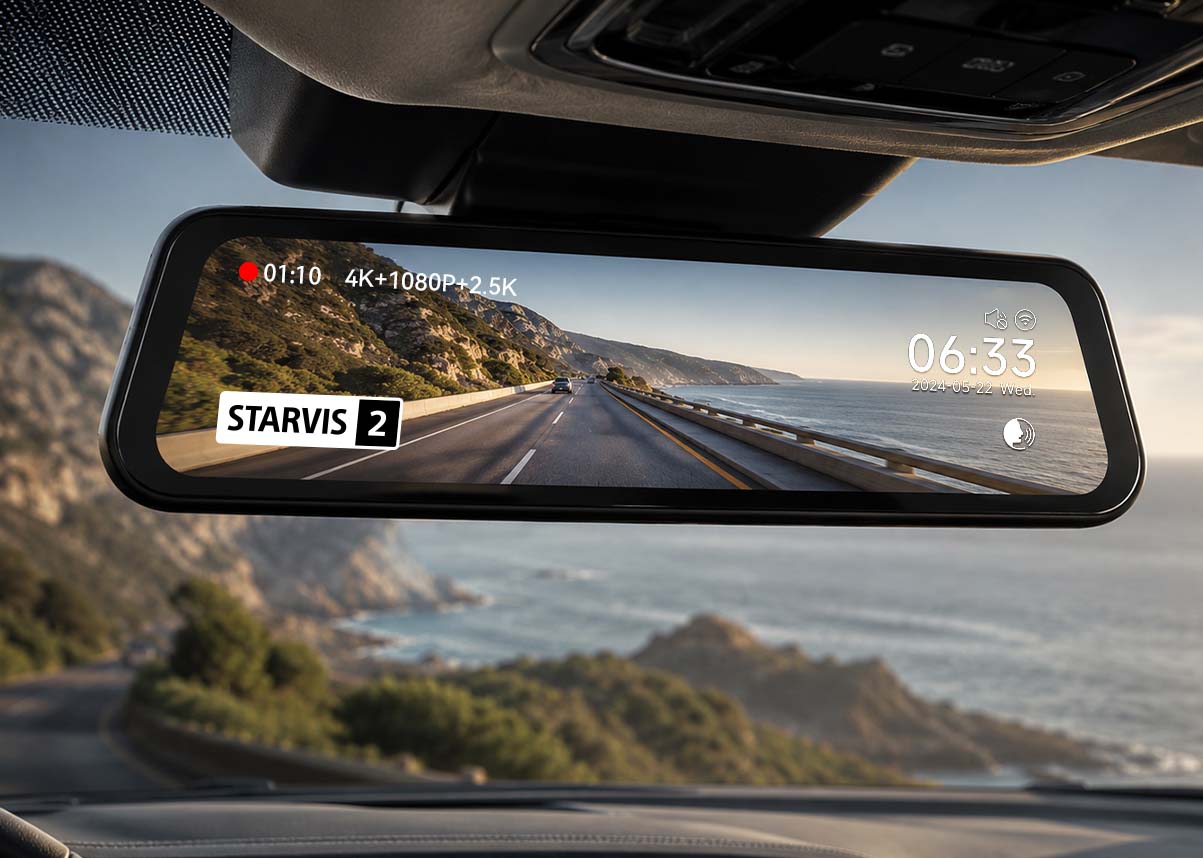
Long-distance driving creates very different challenges compared to short daily commutes. Extended highway hours, extreme dashboard heat, overnight parking, and changing weather conditions all place heavier demands on your recording equipment. The best dash cams for long drives should provide stable recording performance, strong heat resistance, reliable storage management, clear day and night footage, and features that improve visibility and safety during multi-hour road trips.
What Makes the Best Dash Cams for Long Drives Different?
Regular daily commutes demand basic video capture. However, extended road trips put massive stress on your electronics.
Heat Resistance and Endurance
Extended trips expose your camera to direct sunlight for hours. Standard cameras overheat and fail under such pressure. You need a device built with supercapacitors rather than standard lithium batteries. Supercapacitors handle extreme dashboard temperatures easily and prevent hardware meltdowns.
Uninterrupted Video Saves
Hours on the road require massive data storage capacities. Standard cameras rewrite important files too quickly. A top-tier best dash cam for long trips utilizes high-endurance memory cards and smart file locks. It preserves accident footage safely and prevents data loss.
Constant Power Reliability
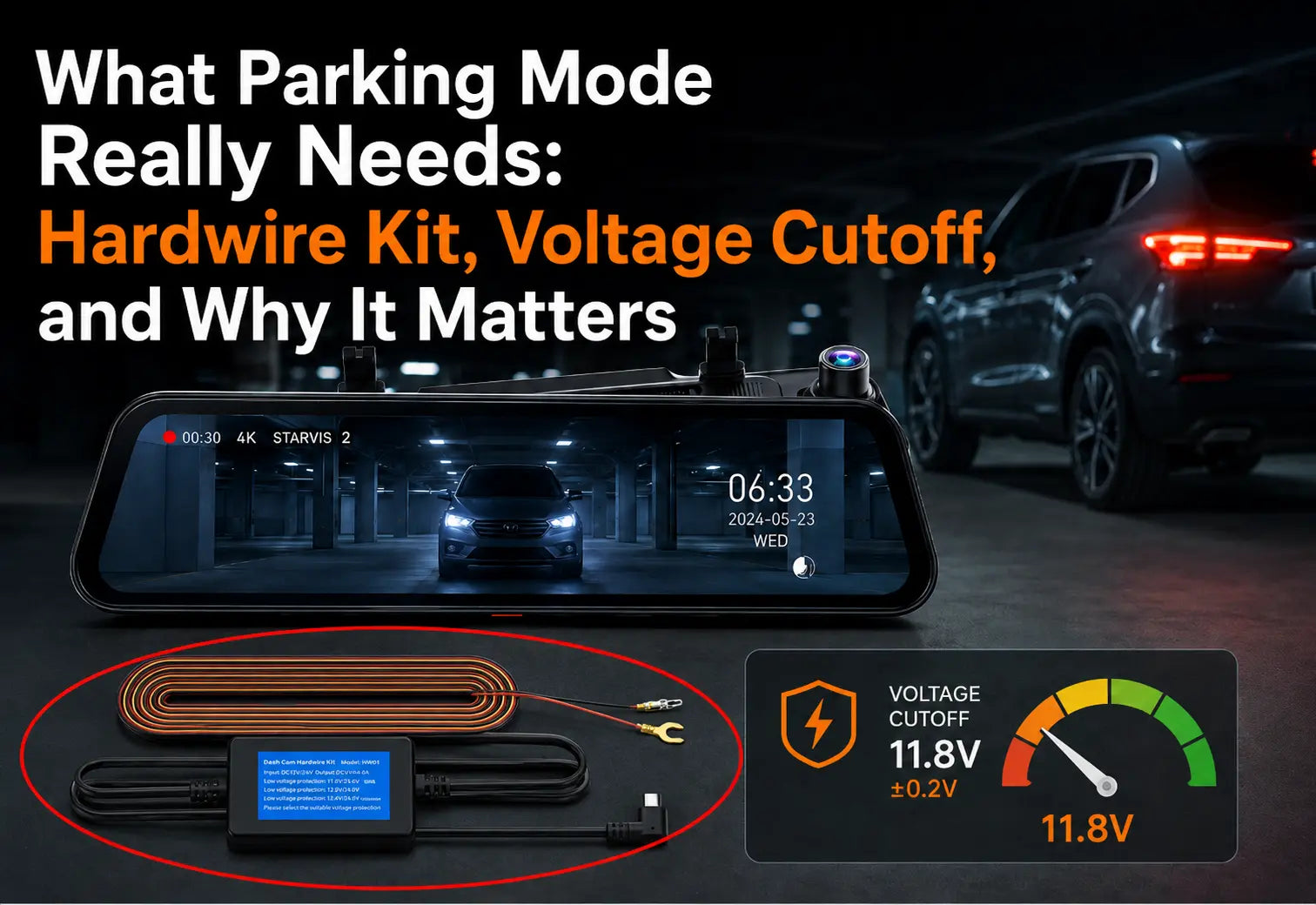
Long stretches of highway demand steady power delivery. A hardwire kit connects the camera directly to your fuse box. This constant energy supply prevents sudden shutdowns and keeps the device active. It maintains a watchful eye over your vehicle around the clock.
Key Features to Look for in a Dash Cam for Long Road Trips
When you search for the best dash cams for road trips, you must prioritize specific capabilities.
High Video Quality and Wide Field of View
For your safety, clear footage is the most important thing. Resolutions of 1080p or 4K capture license plates and road signs with precision. A wide 140 to 180-degree field of view helps you see across multiple lanes.
Reliable Storage and Loop Video Overwrites
Your camera needs high-capacity SD cards to handle multi-day expeditions. Loop file management deletes the oldest regular files to make room for new data. High-endurance cards can handle constant read and write cycles without getting corrupted.
GPS Logs and Route Data
GPS antennas add speed and location coordinates directly to your video files. This information is very helpful for checking navigation and getting exact details about where an incident happened. If something happens in a place you’re not familiar with, you have the exact coordinates for emergency responders.
Parked Car Mode for Overnight Stops
Leaving your car unattended overnight at a hotel or on a trailhead you don’t know well can be dangerous. Motion sensors and impact detectors wake the camera up so it can catch vandals or hit-and-run drivers. This special protection keeps an eye on your car while you sleep.
Night Vision and WDR Performance
There aren’t enough street lights and visibility on late-night highway routes. Wide Dynamic Range balances dark shadows and bright headlights perfectly. Premium sensors make low-light conditions better so that images are clear.
Fatigue Reminders and Driver Alerts
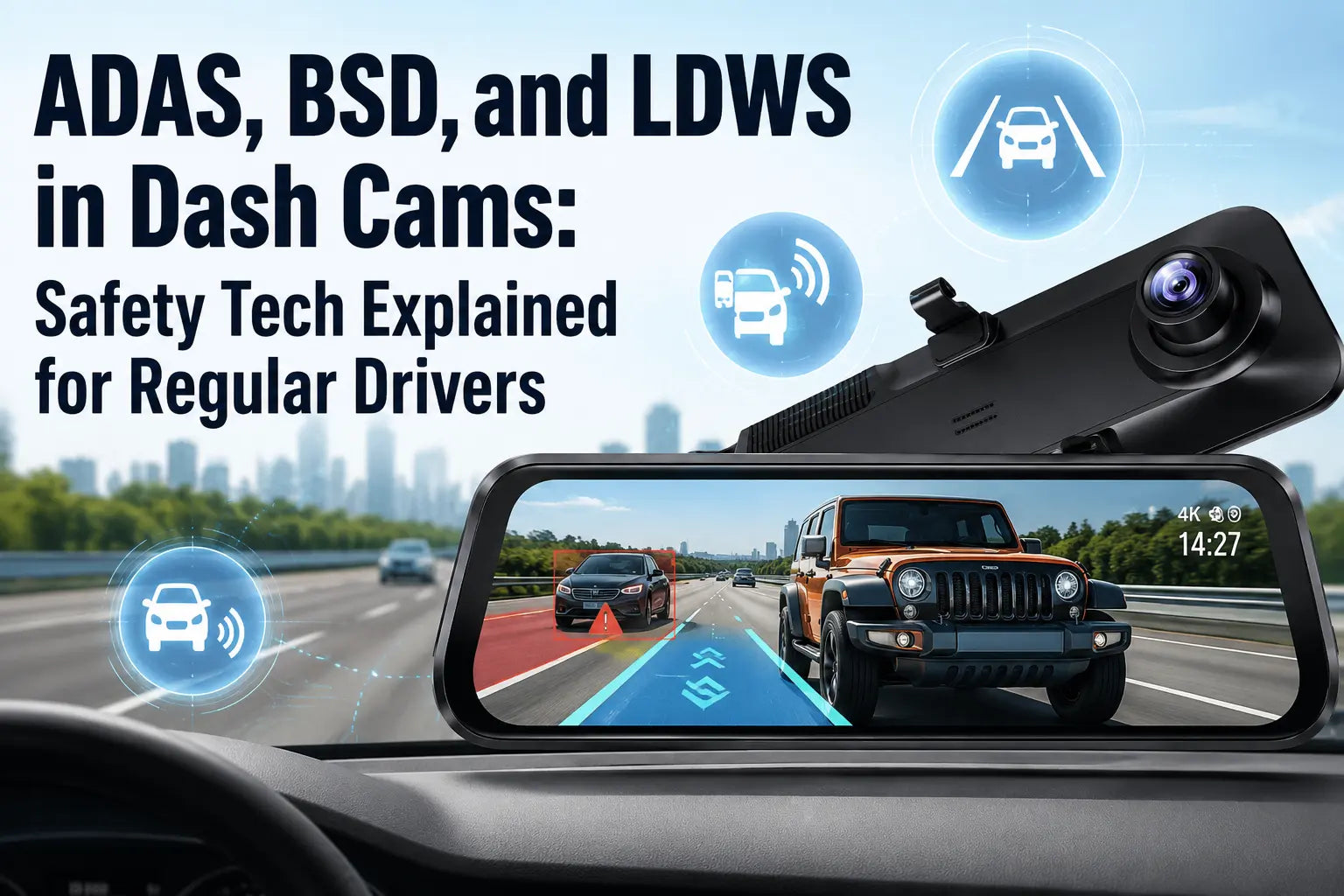
Marathon highways run exhaust drivers and reduce reaction times significantly. Smart cameras feature custom timers to warn you when you need a break. These alerts prompt you to pull over and rest your eyes.
Types of Dash Cams for Long Trips
Different travel styles require different camera setups to match your exact needs. Solo drivers need different coverage than large families.
Single vs Dual vs Three-Channel Setups
A single front camera protects basic forward views for solo travelers. Dual cameras add rear coverage to protect against tailgaters and rear-end collisions. Three-channel systems add an interior view. This cabin view protects rideshare drivers and monitors kids in the back seat.
Mirror Dash Cam vs Regular Dash Cam
Mirror models strap over your factory rearview mirror and turn it into a digital display. When your trunk is packed with luggage blocking the rear window, the mirror cam's rear camera feed still shows you exactly what's behind — no blind spot, no guesswork. Compact wedge models hide behind the mirror and keep a low profile, which works well for drivers who prefer an unobtrusive setup.
For road trips, the mirror style has a clear advantage: full cargo means a useless physical mirror, but the digital rear view keeps working.
5 Best Dash Cams for Long Drives in 2026
The best dash cams for long drives should offer stable recording performance, clear day and night footage, large storage support, and features that reduce blind spots during hours on the road. The following models stand out in 2026 for their combination of video quality, reliability, and road-trip-focused functionality.
Wolfbox G900TriPro Cabin Version
The Wolfbox G900TriPro combines a 12-inch mirror display with three independent channels — front, rear, and cabin — recording in 4K front, 2.5K rear, and 1080p cabin simultaneously. Its supercapacitor handles extreme dashboard heat on multi-state drives without shutting down, and it supports up to 256GB for days of continuous footage.
Why it's one of the best for long drives: Three-channel coverage eliminates blind spots in every direction. When the trunk is packed with luggage, the mirror display still shows a clear rear view. The supercapacitor keeps the camera running through hours of direct sun on multi-state drives — no battery swell, no shutdown.
|
Specification |
Detail |
|
Resolution |
4K Front + 2.5K Rear + 1080p Cabin |
|
Screen Size |
12-inch Touchscreen |
|
Storage |
Up to 512GB |
|
Supercapacitor |
Yes |

Wolfbox G900Pro
The G900Pro is a dual-channel mirror dash cam recording 4K front and 2.5K rear through a Sony STARVIS IMX678 sensor. The 12-inch digital mirror replaces your factory rearview mirror and displays a live rear camera feed even when the rear window is blocked. Built-in GPS logs speed, coordinates, and driving routes. Includes 5.8GHz WiFi, voice control, and parking monitoring.
Why it's one of the best for long drives: The rear camera feed eliminates the cargo-blind-spot problem that every road tripper with a full trunk knows. The STARVIS sensor delivers usable footage after dark.
|
Specification |
Detail |
|
Resolution |
4K Front + 2.5K Rear |
|
Night Vision |
Super Night Vision |
|
GPS |
Yes |
|
Wi-Fi |
5.8GHz |

Garmin Dash Cam 67W
The Garmin 67W is a compact wedge camera with a 180-degree ultra-wide field of view that captures across multiple lanes. Voice control keeps hands on the wheel, and the cloud vault uploads footage automatically when the camera detects an incident.
Why it's one of the best for long drives: Its wide field of view catches merge accidents and lane-change incidents common on congested highway routes, and voice control reduces distraction during long hours behind the wheel.
|
Specification |
Detail |
|
Resolution |
1440p |
|
Field of View |
180 degrees |
|
Cloud Vault |
Yes |
|
Size |
Pocket-sized |
Vantrue N4 Pro
The Vantrue N4 Pro uses a Sony STARVIS 2 sensor for low-light performance on all three channels — front, cabin, and rear. Buffered parking mode captures events a few seconds before impact, making it effective for overnight stops at unfamiliar locations.
Why it's one of the best for long drives: The STARVIS 2 sensor delivers usable footage in near-dark conditions, which matters for late-night highway arrivals and campsite parking in unlit areas.
|
Specification |
Detail |
|
Resolution |
4K + 1080p + 1080p |
|
Sensor |
Sony STARVIS 2 |
|
Wi-Fi |
Yes |
|
Parking Mode |
Buffered |
Nextbase 622GW
The Nextbase 622GW includes an emergency SOS feature that detects severe impacts and automatically contacts emergency services if the driver doesn't respond. It also has an extreme weather mode that adjusts exposure for heavy rain, snow, and glare.
Why it's one of the best for long drives: The SOS function provides a safety net for solo travelers driving through remote areas with limited cell coverage, and the weather mode keeps footage usable in the varied conditions that cross-country trips inevitably encounter.
|
Specification |
Detail |
|
Resolution |
4K |
|
SOS Feature |
Yes |
|
Extreme Weather Mode |
Yes |
|
Mount |
Magnetic |
Real-World Considerations for Long Road Trip Dash Cam Use
When you look at equipment, specifications only tell you part of the story. How well the camera works depends on how you use it every day.
Heat, Weather, and Multi-State Climates
Your car crosses state lines and drives through weather that isn’t always predictable. Desert roads heat up your dashboard, while mountain passes cool it down. To survive these huge temperature changes, you need to choose a supercapacitor model. Battery models swell and break when they are under this kind of stress all the time.
Mounting Position for Highway Travel
If you put your camera in the wrong place, it will block your view or take too much sky. To see the whole road, you need to put the lens high on the windshield. Putting it in the right place makes the horizon line perfectly balanced, which keeps dark exposure from happening. A strong mount stops vibrations and video from getting blurry when driving fast on the highway.
Storage Capacity for Multi-Day Adventures
A five-day vacation makes a lot of video data very quickly. A regular 32GB card will overwrite itself after only two hours of 4K video. To save several days of travel, you need a card with at least 256GB or 512GB of space. High capacity stops beautiful scenic routes from being deleted by mistake.
How to Set Up Your Dash Cam Before a Long Drive
Getting ready makes sure that your tools work perfectly when something goes wrong.
Format SD Card and Test Video
Old files slow down reading speeds and damage new files. Before you leave, you need to format the memory card right in the camera menu. Do a short test lap around your neighborhood to make sure the audio and video are clear. This quick check stops you from finding out too late that the camera didn’t save any data.
Enable Parked Car Mode Features
Your car is left alone in strange hotel parking lots for hours. To catch vandals, you need to turn on the parked car mode menu settings. Set the motion sensitivity to medium so that wind and trees don’t set off false alarms. This proactive step stops thieves and hit-and-run drivers while you sleep.
Check Mounting Bracket Stability
Over time, thousands of bumps on the highway make suction cups and adhesive pads less sticky. You need to clean the glass and press the mount hard against the windshield. Check the angle and make sure all the screws on the bracket are tight. A secure mount keeps the camera from falling while you’re on the road and stops shaky video.
Update Firmware and App Settings
Old software can cause problems and random restarts. You need to connect the camera to the app on your phone and look for new firmware versions. Get the newest updates to fix bugs and make videos more stable. New software makes sure your device stays responsive and reliable all the way through.
Set Loop Video Overwrite Intervals
You need to set how long each video file will play before the next one starts. To find a good balance between file sizes and easy transfers, set the interval timer to three minutes. Files that are shorter move to your phone much faster than huge ten-minute blocks. This setup makes it easier for you to send a quick video to the police.
Set Up Alerts for Rest Breaks
Highway hypnosis is very dangerous for you and your passengers. You need to turn on the camera’s fatigue reminder timer. Set it to ring every two hours to remind you to move your legs. This sound alert keeps you safe and awake.
Conclusion
You need reliable gear to take pictures and keep your car safe on a cross-country trip. The best dash cams for long trips give you a clear record of your trip and complete peace of mind. They are like a silent witness for safety and a reliable historian for your road stories. To make your trip better, you need to pick a strong model like the Wolfbox G900TriPro.
Long-distance travel puts extra pressure on both drivers and vehicles, which is why choosing reliable recording equipment matters before any major trip. The Best Dash Cams for Long Drives should deliver stable performance in extreme temperatures, clear footage during day and night driving, dependable storage management, and features that improve overall road awareness during extended highway hours.
Whether you prioritize three-channel coverage, parking protection, GPS tracking, or mirror-style visibility, selecting the right setup can make long-distance driving safer and less stressful. For drivers looking for a balance of visibility, durability, and road-trip-focused features, models from Wolfbox stand out as strong options for extended travel and multi-day driving adventures.
FAQs
Is a dash cam worth it for a road trip?
Yes, it gives hard proof in accidents and records beautiful scenic routes. It keeps your car safe when you park it at hotels you don’t know.
What is the best dash cam for long road trips?
Here, models with 4K resolution, supercapacitors, and a lot of storage space do best. The Wolfbox G900TriPro is a top-notch choice.
How much storage do I need for a long drive?
To stop files from being overwritten quickly, you need a memory card with at least 256GB of space. High capacity safely stores footage for several days.
Is a fatigue reminder feature useful for long drives?
Yes, it tells you to take breaks and give your eyes a break. This sound alert stops dangerous highway hypnosis and crashes.

Leave a comment
All comments are moderated before being published.
This site is protected by hCaptcha and the hCaptcha Privacy Policy and Terms of Service apply.