



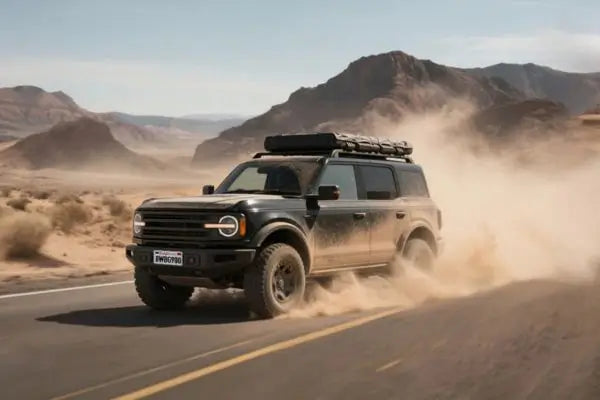
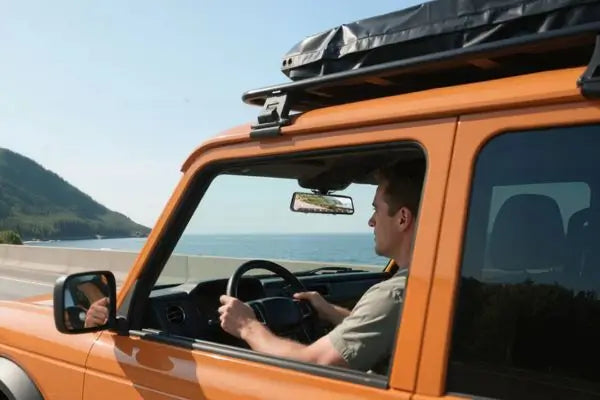
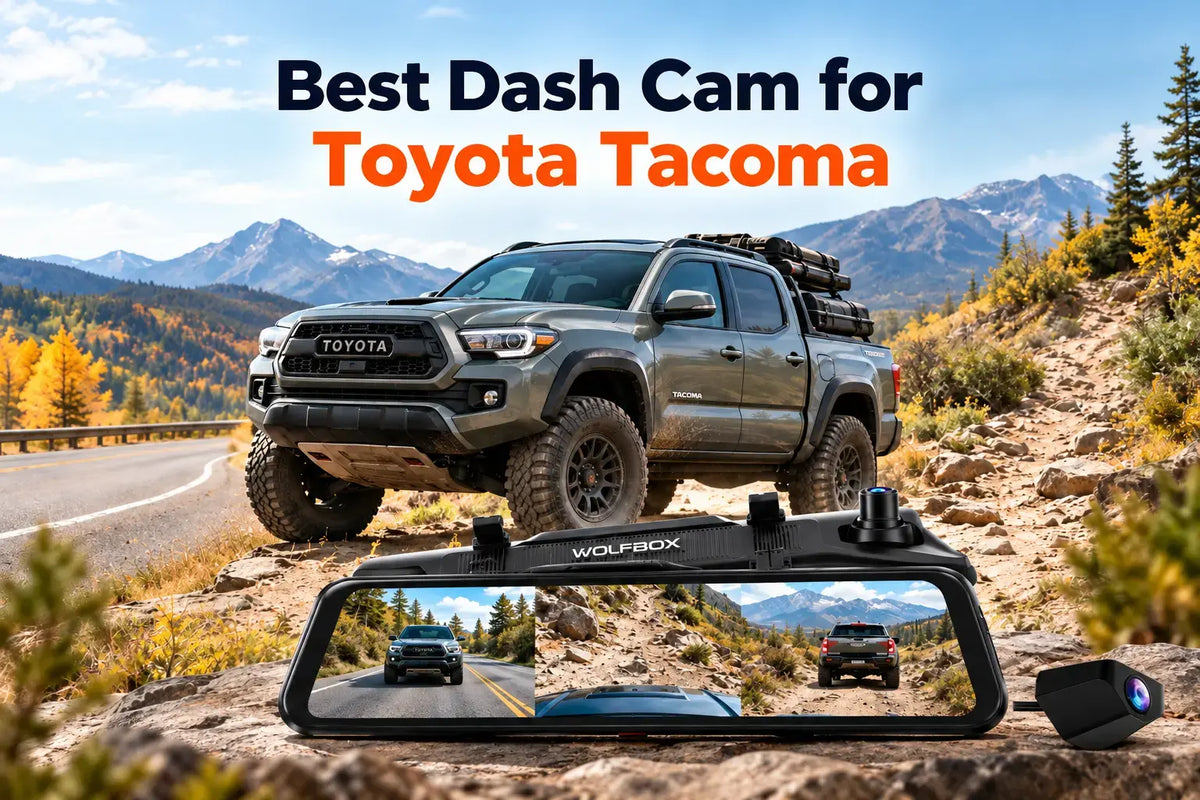
A Tacoma lives a double life. On weekdays, it's a commuter truck fighting traffic; by Saturday morning, it's climbing a fire road with rocks you can't quite see over the hood. The best dash cam for Toyota Tacoma owners needs to cover both jobs.
That matters even more this time of year. Fall brings shorter days, more wildlife on rural roads, and the kind of mountain trips that put a truck's ground clearance and visibility to the test. This guide explains what a genuinely trail-ready dash cam needs.
We'll then break down the WOLFBOX G900TriPro Bumper Version. It's built specifically around the blind spot every off-roader knows about: the ground right in front of the bumper. You can spend five days a week in traffic and five weekends a season on forest roads.
Table of Contents
- Best Dash Cam for Toyota Tacoma: The Quick Answer
- Daily Duty: What a Tacoma Owner Needs On-Road
- Trail Duty: Why Off-Roaders Need More Than Front and Rear
- G900TriPro Bumper Version: Full Breakdown
- How the Bumper Version Compares to the Cabin Version
- Installing G900TriPro Bumper Version Dash Cam on a Tacoma
- Getting Ready for Fall Mountain Trips
- Conclusion
Best Dash Cam for Toyota Tacoma: The Quick Answer
The WOLFBOX G900TriPro Bumper Version specifically suits trucks that split time between pavement and trail. It adds a third, ultra-low-angle camera mounted on the front bumper to the usual front-and-rear setup. [1]
That bumper camera solves a problem no standard 2-channel dash cam can address.
Toyota sold 274,638 Tacomas in 2025 alone, a 42.4 percent jump that cemented its 17-plus-year run as America's best-selling mid-size pickup. [2] Many commute during the week and head for the mountains on weekends.
What Makes a Dash Cam "Trail-Ready"
Several features set a trail-capable dash cam apart from one marketed toward trucks. Many dash cams marketed toward trucks tend to miss at least one of them.
- A wide-angle front camera that captures the road or trail ahead in enough detail to matter later.
- Rugged, waterproof components for any camera mounted outside the cabin to prevent trail dust and water crossings.
- GPS logging that tracks speed, route, and elevation changes for retracing any trail routes.
- A screen or app that's actually usable with gloves on or in bright sunlight, not just in a climate-controlled test drive. [3]
Why the Bumper Camera Is the Key Feature for Trails?
It's the feature that separates a Tacoma-specific recommendation from a generic truck dash cam. That's why the G900TriPro Bumper Version is ideal for Tacoma and mid-size trucks. [4]
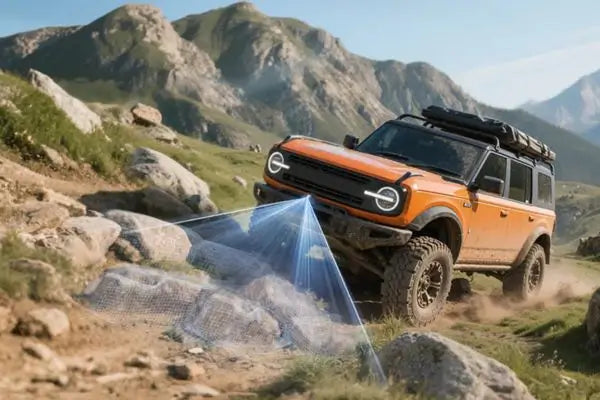
A hood and front bumper block the driver's view of the ground for several feet. The blind zone makes every off-roader uncomfortable.
The G900TriPro's bumper camera mounts at that low angle specifically. You can see rocks, ruts, and obstacles that a standard windshield-mounted camera can't. [1]
It's the industry's first front bumper camera on a mirror dash cam. WOLFBOX takes a different approach from a standard front-and-rear system.
Daily Duty: What a Tacoma Owner Needs On-Road
Most Tacoma miles happen on regular roads, not trails. That means a dash cam still needs to handle commuting, parking lots, and the occasional close call in traffic.
It's easy to forget that most of a truck's life happens somewhere ordinary.
Fall specifically raises the stakes here. Animal-related collisions spike sharply during the same months many Tacoma owners are planning mountain trips. [5]
Commuting and Daily Driving Coverage
The basics still matter, even on a truck built for the trail. It lays the foundation for the trail-specific features built on top.
- A 4K front camera captures enough detail to read plates and signs. It's useful for documenting an everyday fender-bender just as much as a trail mishap.
- A 2.5K rear camera helps you back out of tight parking spots and captures what happens behind the truck in traffic.
- GPS logs timestamps, speed, and route. It can matter for insurance claims after a daily commute incident, not just an off-road one. [1] [3]
Fall Mountain Trips Bring Extra Risk
The seasonal timing isn't a coincidence, and the data clearly backs it up. Anyone planning a fall trip up into elevation is statistically walking into exactly the conditions this data describes.
- October, November, and December account for roughly 41 percent of all animal collision claims in a given year, with November the single riskiest month.
- Animal collisions happen far more often at night, exactly when a lot of mountain drives, especially returning from a weekend trip, tend to happen. [5]
- A truck heading up into higher elevation for a fall trip is statistically more prone to encounter deer or elk on the road than the same truck making a summer commute.
Trail Duty: Why Off-Roaders Need More Than Front and Rear
Once the pavement ends, a standard 2-channel dash cam starts missing an entire dimension. That's where the case for a third camera actually gets made, not just claimed on a spec sheet.
A front-and-rear setup covers the road ahead and behind. But it can't see the ground directly under a raised hood. That's where rocks, stumps, and ruts live on a technical trail. The G900TriPro Bumper Version closes that gap. [4] [6]
The Blind Spot No Dash Cam Used to Cover
Anyone crawling a rocky trail knows the blind spot, even if they've never had a name for it. It's one of those problems that's obvious the moment someone points it out, and easy to overlook otherwise.
- A raised hood and front bumper hide several feet of ground directly in front of the vehicle, out of sight from the driver's seat.
- Spotters exist specifically to cover this blind spot on technical trails, since drivers genuinely can't see it themselves.
- A low-angle bumper camera effectively gives a solo driver some of that spotter function, right on the mirror screen. [3] [4]
What Real Off-Roaders Say About It
Independent reviews from off-road-focused outlets back up how this plays out in practice. These aren't brand marketing claims; they're outlets that cover off-road gear and describe real use.
AutoGuide's hands-on review specifically called out crawling down a two-track trail while watching the actual trail surface directly in front of the vehicle, describing it as "crucial for rock crawling." [7]
Dirt Wheels Magazine's review noted the triple-camera system, including the bumper view, "lessens blind spots during rocky or muddy roads," a common trail condition on mountain routes. [8]
AutoGuide's review further noted a firmware update added distance calibration and guidelines specifically for the bumper camera. It notes that the feature noticeably improves on-road use. [7]
WOLFBOX G900TriPro Bumper Version: Full Breakdown
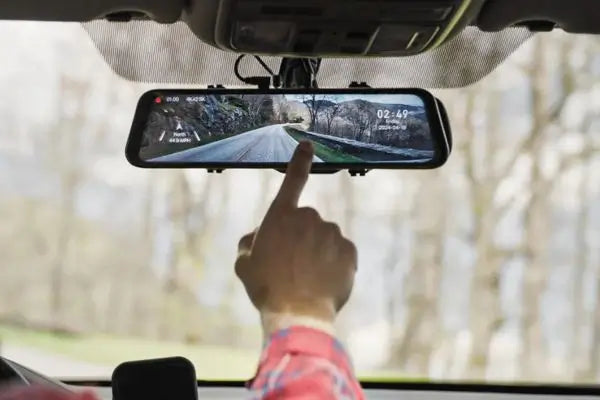
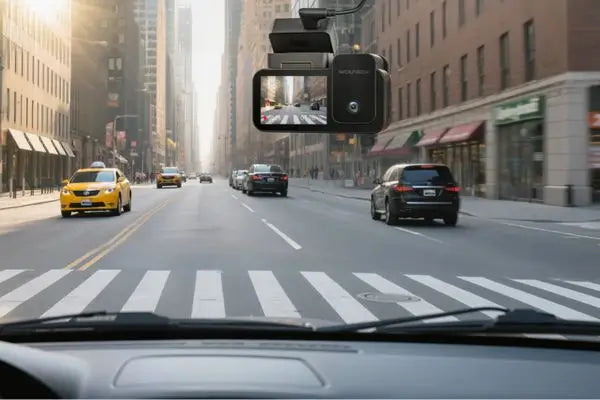
The G900TriPro Bumper Version pairs a Sony IMX678 sensor for 4K front recording with a 2.5K rear camera and a 1080P waterproof bumper camera. All three feed into the same 12-inch mirror display.
It's priced around $400 on the official WOLFBOX website. However, the brand's site-wide discount usually brings the checkout price closer to $320 to $340. [1]
Camera System and Sensors
Each of the three cameras is built for a specific job in this setup. None of the three feels like an afterthought bolted onto the other two. [1] [7]
- Front: Sony IMX678 sensor delivering true 4K (3840×2160) resolution, sharp enough for daily driving footage and trail documentation alike.
- Rear: an upgraded OS04J10 sensor for 2.5K resolution with notably improved night vision over previous generations.
- Bumper: a waterproof 1080P camera mounted at the front bumper's ultra-low angle, built to handle water crossings, mud, and dust.
Software, Control, and Protection Features
The features layered on top of the camera hardware round out the daily-and-trail dual purpose. They make the difference between a camera you check occasionally and one you actually rely on. [1] [8]
- 5.8GHz WiFi and app control let you pull footage without removing the memory card, plus voice control for hands-free operation on rough terrain.
- Built-in GPS logs speed, route, and coordinates, viewable later through the WOLFBOX GPS player alongside your footage.
- 24/7 parking monitoring, when paired with a hardwire kit, watches the truck at the trailhead or in a driveway between trips.
- A G-sensor locks footage automatically after a hard impact, whether that's a fender-bender in a parking lot or a harder-than-expected trail hit.
How the Bumper Version Compares to the Cabin Version
The Cabin version swaps the bumper camera for an interior-facing camera. It suits rideshare drivers or families who want to monitor the cabin rather than the ground ahead. For a Tacoma owner focused on off-road use, the Bumper version is the more relevant choice. [9]
When the Cabin Version Makes More Sense
- The Cabin version records front, rear, and interior simultaneously, aimed at documenting what's happening inside the vehicle.
- It suits rideshare or delivery drivers, or parents who want a record of what's happening with passengers, more than it suits an off-road use case.
- Both Bumper and Cabin versions share the same 12-inch mirror display, front and rear camera specs, and core software features.
Why the Bumper Version Wins for a Tacoma
- A Tacoma built for trail use benefits more from seeing the ground ahead than from monitoring the cabin.
- The bumper camera captures blind spots that matter on technical terrain, which a cabin camera doesn't cover.
- Unless cabin monitoring is a specific priority, the Bumper version is the more useful pick for the audience.
Installing WOLFBOX G900TriPro Bumper Version Dash Cam on a Tacoma
A Tacoma's cab layout and front-end design bring a few specific installation details worth planning for. They're easy to underestimate if you've only ever installed a standard 2-channel system before.
The mirror-replacement design fits over a Tacoma's factory mirror like any vehicle. However, routing the bumper camera cable to the front of the truck takes a bit more planning. [6] [10]
Mounting the Bumper Camera
The bumper camera is the one component that's new territory compared to a standard 2-channel install. Take a little extra time, since it's the part of the install that differs most from a dash cam setup.
- Choose a mounting spot low enough to see the ground ahead but protected from the most direct impact of rocks and debris.
- WOLFBOX's bumper camera ships with a long cable specifically to reach from the front bumper back to the mirror unit inside the cabin.
- Secure the cable along the frame rail or existing wiring channels; don't let it hang loose near moving suspension components.
Routing Cables on a Mid-Size Truck
- Route the front bumper camera cable through the engine bay along existing factory wiring loom where possible.
- Use a hardwire kit connected to a fuse box location that stays powered appropriately for parking mode, and confirm the low-voltage cutoff setting.
- Test the bumper camera's view and calibration in a driveway before heading to the trailhead, adjusting the angle if the current view doesn't show what you expect.
Getting Ready for Fall Mountain Trips
Fall mountain trips combine higher wildlife risk, changing weather, and trail conditions that shift quickly with rain or early snow. Such conditions make documented footage more valuable than during a routine summer drive. [5]
Before You Head Up the Mountain
A short pre-trip routine catches most problems before they surface at the worst time. Five minutes in the driveway beats discovering a loose mount an hour up a forest road.
- Check that all three cameras are recording properly and the memory card has enough free space for a full day's footage.
- Confirm the bumper camera's mounting is still secure after any recent trail use, since vibration and impacts can loosen mounts over time.
- Charge or verify the backup power setup if you're relying on parking mode overnight at a trailhead or campsite.
What to Do If You Hit Wildlife
Given how sharply animal collision risk rises in fall, it's worth knowing what happens next. Having a plan beforehand beats figuring it out in the moment.
- Move to a safe location if possible, then check that the front camera's G-sensor automatically locked the relevant footage.
- Report the collision to local authorities if required in your state. Keep the locked footage for an insurance claim.
- Most insurers treat animal collisions as a comprehensive claim, but having footage still helps establish exactly what happened.
Conclusion
A truck that works all week and plays on the weekend needs a dash cam built for both. The WOLFBOX G900TriPro Bumper Version covers the daily commuting basics with 4K front and 2.5K rear cameras.
Then it adds the one feature a standard system can't offer: a bumper-mounted view of the ground your hood otherwise hides. [1]
Fall brings more wildlife on the road, and more Tacomas are heading for the mountains at the same time. So, having that extra angle covered, on pavement and on the trail, means optimal protection for the Toyota Tacoma.
Frequently Asked Questions (FAQs)
What is the best dash cam for a Toyota Tacoma?
The WOLFBOX G900TriPro Bumper Version is a strong fit. It combines a 4K front cam, 2.5K rear cam, and a unique 1080P bumper cam to show the ground blind spot in front of an off-road truck.
What does the bumper camera on the G900TriPro actually do?
It mounts at a low angle on the front bumper. It lets you see rocks, ruts, and obstacles that a hood- and standard windshield-mounted camera can't. Such details are useful for technical trail driving.
Is the WOLFBOX G900TriPro Bumper Version waterproof?
The bumper camera is waterproof. It can effectively handle water crossings, mud, and dust. Since it's mounted outside the cabin at the front of the vehicle, the cam has to handle those rigors.
Why does fall matter for dash cam use on a mountain-bound truck?
Animal collision claims rise sharply in fall. October through December account for 41% of all annual claims, and November remains the peak. And documented footage becomes more valuable.
Can I install the G900TriPro Bumper Version myself on a Tacoma?
Yes. Routing the bumper camera cable to the front of the vehicle takes more planning. Follow the factory wiring loom and secure the cable away from moving parts for a cleaner installation.
References
[1] WOLFBOX: "Wolfbox G900TriPro Bumper Version" – https://wolfbox.com/products/wolfbox-g900tripro-bumper-version-3-channel-rearview-mirror
[2] Motor1: "The Toyota Tacoma Just Had Its Best Year Ever" – https://www.motor1.com/news/783479/toyota-tacoma-sales-2025/
[3] WOLFBOX: "Off-Roading Adventures Made Safer with Wolfbox Dash Cams" – https://wolfbox.com/blogs/dash-cams/off-roading
[4] Tacoma World: "Any Wolfbox G900 TriPro Bumper Enjoyers" – https://www.tacomaworld.com/threads/any-wolfbox-g900-tripro-bumper-enjoyers.871739/
[5] State Farm: "New State Farm Data Reveals Fewer Animal Collisions, But Autumn Months Remain Most Dangerous" – https://newsroom.statefarm.com/new-state-farm-data-reveals-fewer-animal-collisions-but-autumn-months-remain-most-dangerous/
[6] 4Runner6G: "Wolfbox G900 TriPro Bumper Dash Cam Off-Road Video" – https://www.4runner6g.com/forum/threads/wolfbox-g900-tri-pro-bumper-cam-dash-cam-off-road-video-installation-and-review.6091/
[7] Auto Guide: "Wolfbox G900 TriPro Dash Cam Review" – https://www.autoguide.com/auto/wolfbox-g900-tripro-dash-cam-review-44623066
[8] Dirt Wheels Magazine: "Wolfbox G900 TriPro Bumper Version: The Ultimate Off-Road Dash Cam" – https://dirtwheelsmag.com/wolfbox-g900-tripro-bumper-version-the-ultimate-off-road-dash-cam/
[9] WOLFBOX: "Wolfbox G900TriPro Bumper vs Cabin" – https://wolfbox.com/blogs/dash-cams/g900tripro-bumper-vs-cabin-which-three-channel-setup-fits-your-vehicle
[10] Dash Cam Guys: "Wolfbox G900TriPro Bumper Version User Manual Guide" – https://dashcamguys.com.au/blogs/user-guides/wolfbox-g900-tripro-user-manual-guide
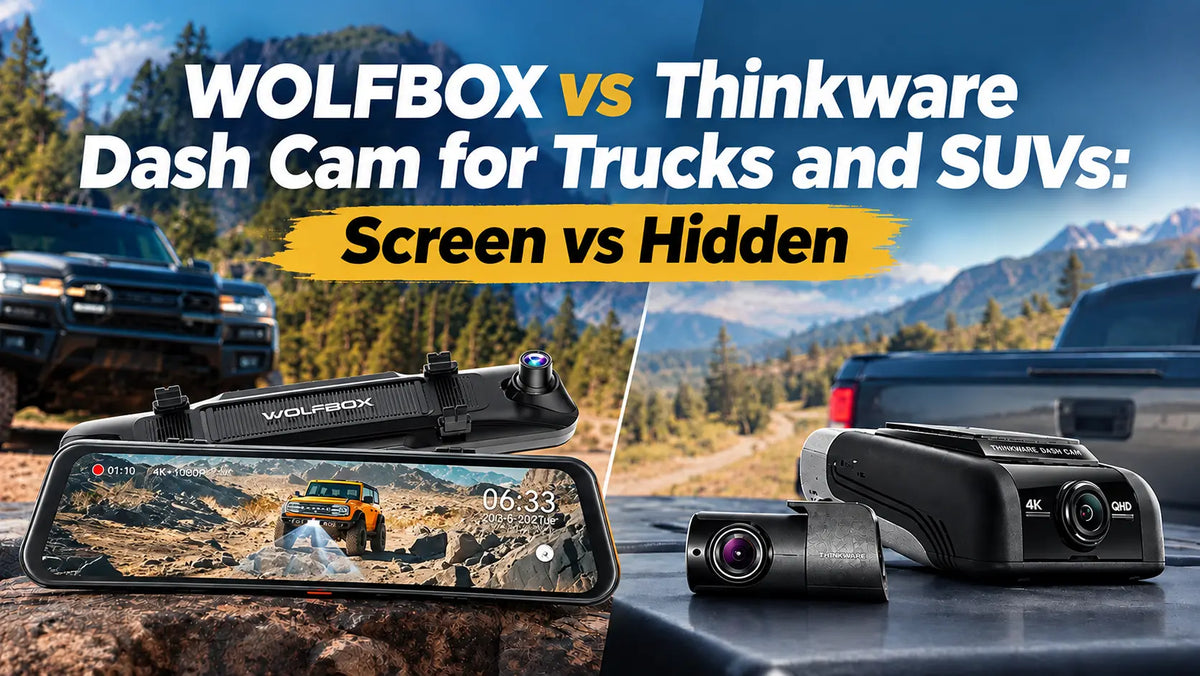

Leave a comment
All comments are moderated before being published.
This site is protected by hCaptcha and the hCaptcha Privacy Policy and Terms of Service apply.