
Table of Contents
- The Ruling
- Impact on Off-Road Community
- Industry Response
- What Comes Next
- WOLFBOX Take: Use It, and Keep It
- Gear for 245 Million Acres
- FAQ
The Ruling
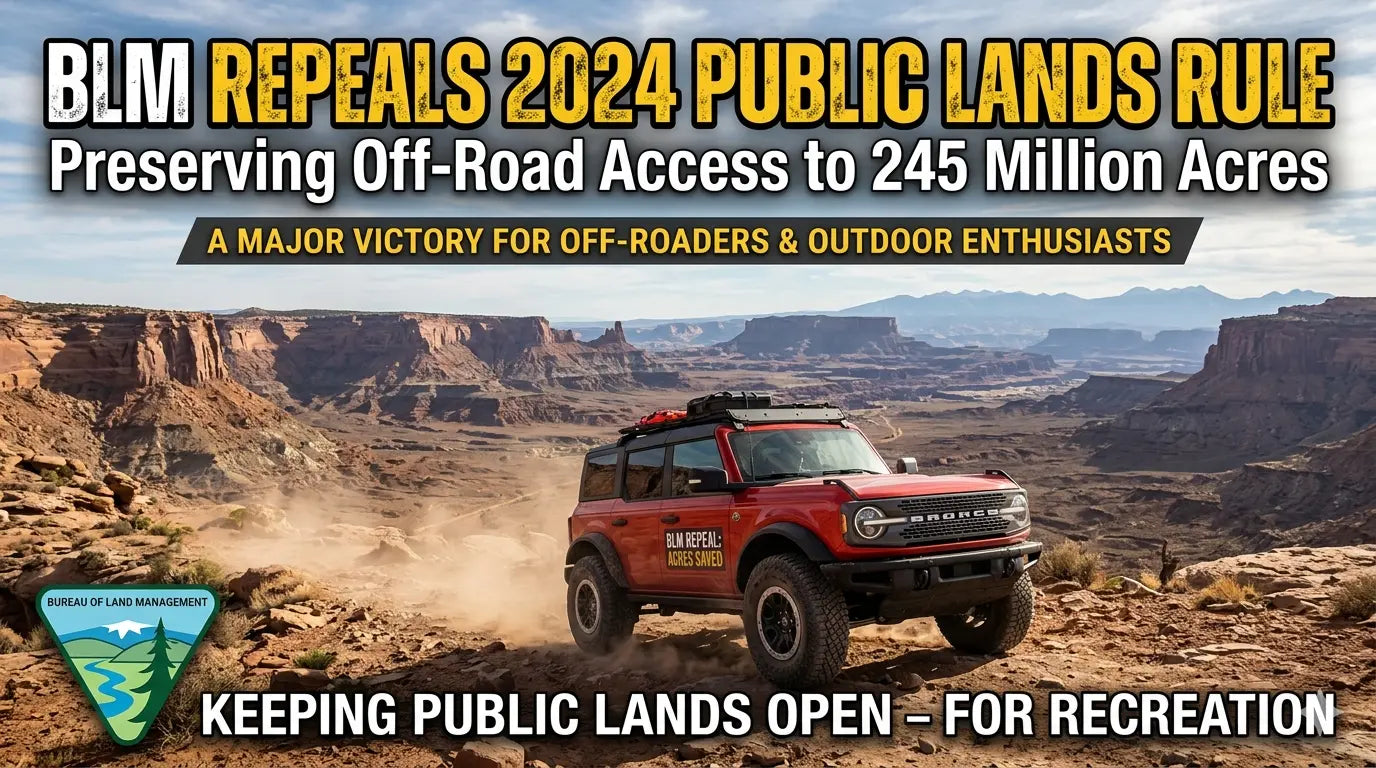
On May 12, 2026, the U.S. Bureau of Land Management (BLM) published a final rulemaking that fully rescinds the Conservation and Landscape Health Rule enacted on May 9, 2024. The new rule, effective June 11, 2026, restores a "multiple-use" framework under the Federal Land Policy and Management Act (FLPMA), reversing the previous administration's approach that elevated conservation as a standalone land use across 245 million acres of federally managed public lands.
Impact on Off-Road Community
The 2024 Public Lands Rule expanded conservation leasing and mitigation mechanisms on federal land, raising widespread concern among off-road and overlanding communities that it could restrict motorized recreation access. The repeal eliminates that uncertainty. Under the restored multiple-use mandate, BLM-managed lands will remain open to recreation, range, timber, mineral development, and other traditional uses alongside conservation.
Industry Response
The Specialty Equipment Market Association (SEMA) and the Off-Road Business Association (ORBA) both welcomed the ruling, stating it protects recreational access for off-road enthusiasts. SEMA noted that the original rule created regulatory uncertainty and added planning burdens that threatened motorized recreation. ORBA described the repeal as "a significant development" for the off-road community.
What Comes Next
While the repeal secures broad off-road access at the federal level, both SEMA and ORBA acknowledged that local-level battles over travel management plans, route designations, and land-use amendments will continue. Conservation groups, including the National Parks Conservation Association, criticized the decision, warning it could weaken public land stewardship.
WOLFBOX Take: You Kept the Access — Now Use It, and Keep It
The headline is reassuring: 245 million acres stay open under the restored multiple-use mandate. But read SEMA and ORBA's own response and the real story is in the fine print — the fight just moves local. Travel management plans, route designations and land-use amendments are still decided trail by trail, county by county, and those decisions increasingly hinge on whether the off-road community is seen as responsible or reckless. Federal access is secured; keeping any specific trail open is now on us.
Two takeaways for riders: there's a lot of ground to go enjoy, and how you ride it is what protects it — both easier with a record of where you've been.
Gear for 245 Million Acres
- Go explore what you kept. With access preserved, it's a good year to get out on BLM land. A WOLFBOX dash cam records your trips with GPS and a timestamp — a travel log of the routes you run, and proof you stayed on legal, designated trails if a local access dispute ever comes up.
- Handle the unfamiliar two-tracks. Exploring new BLM routes means terrain you can't read from the seat. The 3-channel WOLFBOX G900TriPro (Bumper Version) adds a low, waterproof bumper camera so you can see the rock, rut or ledge below your hood.
- Ride in a way that keeps trails open. Our off-road driving safety guide covers staying on designated routes and why a documented, responsible rig matters more as these decisions move local.
FAQ
What did the BLM's May 2026 rulemaking do?
On May 12, 2026 the BLM published a final rule that fully rescinds the 2024 Conservation and Landscape Health Rule, effective June 11, 2026. It restores the “multiple-use” framework under FLPMA, so BLM-managed lands remain open to recreation, range, timber, mineral development and other traditional uses alongside conservation across 245 million acres.
Does this expand off-road access or just preserve it?
It preserves it. The repeal removes the uncertainty the 2024 rule created for motorized recreation rather than opening new terrain — off-road and overlanding groups like SEMA and ORBA had worried the 2024 rule could restrict access.
Is off-road access now permanently secured?
At the federal level it's protected, but SEMA and ORBA both note that local battles over travel management plans, route designations and land-use amendments will continue — so specific trail access is still decided locally.
How can off-roaders help keep trails open?
Stay on designated routes, tread lightly, and keep a record: a GPS dash cam logs where you actually drove, which supports both responsible-use habits and your case if a local access decision is ever in question.

Leave a comment
This site is protected by hCaptcha and the hCaptcha Privacy Policy and Terms of Service apply.